Solutions
Development that Converts: The F&B Playbook for 2026
For food and beverage brands entering new markets, strategic development is the difference between a quiet launch and a commanding debut that drives immediate conversion.
The food and beverage landscape is more competitive than ever. With new concepts emerging weekly and consumer loyalty harder to earn, the brands that win in 2026 won't be those with the best menus alone — they'll be those with development strategies that convert attention into footfall from day one. The gap between a successful launch and a forgettable one is increasingly defined not by the product, but by how that product is introduced to a market that has no reason to care about you yet.
For F&B operators, the challenge is uniquely intense. A restaurant's opening window is narrow, and the first impression often determines whether a venue becomes a local institution or fades into the background noise of high street competition. Development that converts requires more than a marketing budget; it requires a systematic approach to building presence, credibility, and demand from zero.
The Zero-Base Launch Problem
Every new F&B brand faces the same fundamental obstacle: they begin with nothing. No customer database, no local recognition, no social proof. While established chains can leverage existing brand equity to smooth entry into new territories, independent operators and emerging concepts must earn every single customer relationship from scratch.
This zero-base dynamic is particularly acute in city-centre environments, where consumers are bombarded with dining options and have developed sophisticated filters for ignoring new entrants. A new store opening in a saturated location isn't just competing with direct competitors — it's competing for mental bandwidth with every other establishment within a mile radius.
Traditional launch strategies often rely on gradual organic growth, hoping that word-of-mouth and steady footfall will eventually build momentum. But this approach carries significant risk. Rent, staffing, and operational costs begin accruing immediately, and a slow burn can quickly become a financial strain before the brand ever achieves local recognition. Development that converts compresses this timeline, turning what might take months into weeks.
Building Sensory Connection at Scale
The most effective F&B development strategies in 2026 centre on creating immediate, visceral connections with potential customers. Food is inherently sensory, and marketing that fails to convey texture, colour, and appeal is leaving conversion on the table. Static imagery and generic branding won't cut it when consumers are scrolling past dozens of dining options before breakfast.
High-quality, sensory-led content that communicates product appeal at a glance is the cornerstone of modern F&B launch strategy. This content must work across platforms, from social media feeds to location-based advertising, and it must stop the scroll within a fraction of a second. Development that converts demands that every piece of creative assets earns its place by driving measurable action — not just engagement metrics, but real-world visits and orders.
This approach requires a refined visual identity applied consistently across every touchpoint. Brand recognition in a new market is built through repetition, but that repetition must be compelling. Consumers should recognise the brand before they ever see the storefront, and that recognition should carry an emotional weight that makes the first visit feel inevitable rather than risky.
Proving the Framework: The Franky's Story
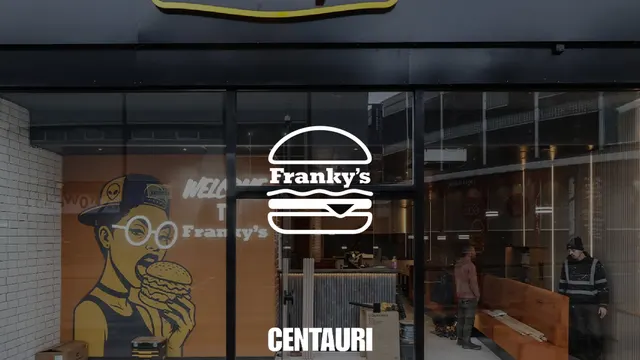
The results of this strategic approach are best illustrated by what happens when a completely unknown brand enters a competitive market with no existing presence whatsoever. Franky's faced exactly this scenario when opening a new store in Stoke city centre, a location already saturated with fast food options and where brand recognition would have to be built entirely from scratch.
Centauri executed a launch-focused growth strategy centred on sensory-rich content and a cohesive visual identity designed to cut through the noise. Rather than relying on gradual organic discovery, the development strategy compressed the timeline significantly. The Solutions (opens in a new tab) approach deployed by the team prioritised conversion from the very first touchpoint, ensuring that every marketing asset was optimised not just for visibility but for driving measurable action.
The outcome was a launch that exceeded all expectations. Within the initial campaign period, Franky's generated over 319,000 views — a figure that would be impressive for an established brand with existing awareness, but remarkable for a new entrant with zero baseline. This volume of organic attention translated directly into footfall, establishing the store as a recognised presence in Stoke city centre within weeks rather than months.
The full details of this launch strategy, including specific creative approaches and audience targeting methodologies, are available in the Franky's case study. What matters for F&B operators planning 2026 launches is the lesson it provides: development that converts is achievable even from a standing start, provided the strategy prioritises immediate sensory connection over slow burn.
The 2026 Imperative: Conversion-First Development
Looking ahead to 2026, several trends will make conversion-focused development even more critical for F&B brands. First, the cost of digital advertising continues to rise, making wasted spend on awareness campaigns increasingly painful. Every pound must work harder, and that means shifting from "brand awareness" metrics to direct response indicators that correlate with real-world behaviour.
Second, consumer attention is fragmenting further. The platforms and channels that worked for launches even two years ago are now overcrowded, requiring more creative sophistication to break through. Development that converts in 2026 will need to be platform-native, audience-obsessed, and relentlessly focused on the specific behaviours that lead to a first purchase.
Third, the window for making a first impression is shortening. Consumers are making faster decisions about where to eat, relying on rapid visual scanning and social validation. A brand that doesn't communicate its value proposition instantly will be swiped past, possibly never to be reconsidered. Development strategy must account for this accelerated decision-making cycle, placing the most compelling product imagery and messaging at every potential touchpoint.
Practical Implementation for F&B Operators
For brands planning new market entries in 2026, the development framework must include several non-negotiable components. First, invest in creative assets that are genuinely sensory — not just high-resolution photography, but content that conveys texture, temperature, and indulgence in a way that triggers an almost physical response.
Second, build a visual identity that works across formats. The same brand elements should be equally compelling on a phone screen, a digital billboard, or a delivery app listing. Consistency doesn't mean boredom; it means that every iteration reinforces recognition and desire simultaneously.
Third, measure conversion from day one. Awareness metrics matter, but they should be correlated with actual store visits, online orders, or app downloads. Development that converts requires feedback loops that connect marketing activity to real-world outcomes, allowing rapid iteration on what's working.
Finally, compress the timeline. The old model of a slow ramp-up followed by eventual organic growth is a luxury few new entrants can afford. Development strategy should aim to achieve in weeks what traditional approaches might accomplish in months, using concentrated creative output and precise targeting to create the illusion of an established brand from the very beginning.
The F&B operators who will dominate in 2026 are already rethinking their approach to market entry. They understand that development isn't just about finding the right location or perfecting the menu — it's about engineering the conditions for immediate conversion. With the right strategy, even a completely unknown brand can command attention, build trust, and drive real-world results from its very first day.
Want the full story? Read our case study with Franky's.