Marketing
Development for Food & Beverage 2026: The Playbook for Launching a F&B Brand That Actually Works
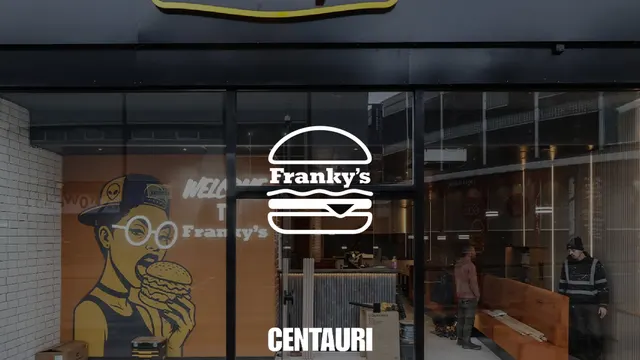
From zero to 319K views: How modern F&B brands are rewriting the launch playbook for a crowded, digital-first market.
If you are launching a food-and-beverage brand in 2026, the ancient wisdom of “build it and they will come” is not just outdated — it is dangerous. The restaurant industry has become a digital battleground where the first impression often happens on a phone screen, not at a front door. A menu board no longer cuts it. A grand opening flyer will be ignored. To survive — and to thrive — brands need a development strategy that treats content, identity, and audience engagement as core infrastructure from day one.
The New Reality for F&B: Launching into a Digital-First Arena
The numbers tell a stark story: diners now discover new places primarily through social media, local search, and word-of-mouth that travels faster online than ever. A brick-and-mortar debut without a parallel digital launch is like opening a restaurant with the lights off. This shift is permanent, and it places an enormous burden on new entrants. You cannot afford to be invisible during the critical first weeks — that window determines whether you become a local staple or a forgotten footnote.
Yet many F&B founders still pour every resource into fit-out and staffing while treating marketing as an afterthought. In 2026, that imbalance is a recipe for failure. The brands that win are the ones that build a development strategy that integrates digital presence, visual storytelling, and rapid audience acquisition from the very beginning. They do not wait until opening day to start building momentum — they start weeks, even months, earlier.
Why Sensory-Led Content Is Non-Negotiable in 2026
The science is simple: people eat with their eyes first. In a digital feed filled with endless distractions, a static photo of a burger will get you a scroll-past. But a video of cheese stretching, steam rising, or sauce drizzling? That triggers an almost Pavlovian response. Sensory-led content — high-quality, appetite-activating video and imagery — is the single most effective tool for stopping thumbs and building desire.
This is not about being “trendy.” It is about matching the medium to the human brain’s wiring. When a potential customer sees a perfectly captured crunch or a slow-motion pour, they do not just see food — they feel the anticipation. That emotional reaction is what drives visits, orders, and loyalty. In 2026, brands that invest in this type of content from day one see dramatically faster traction than those that rely on generic stock imagery or poorly lit phone snaps.
One powerful example comes from a brand-new store called Franky’s, which launched into Stoke city centre with zero existing customer base, no digital presence, and no local recognition. In a hyper-competitive fast-food environment, the risk of opening quiet was enormous. Rather than taking a slow-build approach, Franky’s partnered with Centauri to execute a launch-focused growth strategy centred on sensory-led content designed to capture attention instantly and communicate product appeal at a glance. You can read the full Franky’s story for a deeper dive.
From Zero to Viral: The Numbers That Matter
Results speak louder than any theory. That launch strategy drove over 319,000 views in a concentrated period — a staggering number for a brand that started with zero audience. Those views did not come from paid advertising alone; they were fuelled by organic shareability and the kind of visually arresting content that makes people stop, watch, and tag a friend. For a single new location in a mid-sized city, that velocity is transformative.
The lesson is clear: when you pair a compelling product with a content strategy engineered for maximum sensory impact, you can generate awareness at a scale that would have taken months of traditional marketing. And in 2026, speed matters. The longer it takes to build visibility, the more competitors have time to establish themselves in your market. A fast start creates a moat.
Building a Visual Identity That Grabs Attention in Seconds
Sensory content is only half the equation. The other half is a refined visual identity that applies across every touchpoint — from social media to signage to packaging. In a crowded feed, consistency is credibility. A brand that looks polished and cohesive signals professionalism and quality before a single bite is taken.
This is where many food startups stumble. They invest in a logo but neglect the broader visual system. Colours, typography, photography style, and even the tone of captions must all work together to tell a single story. When done right, this visual identity becomes a shortcut for trust. A potential customer who sees three posts from the same brand with a consistent look will instinctively assume the food is as carefully crafted as the images.
Centauri’s approach — combining high-quality content with a refined identity applied across all channels — proved effective for Franky’s, as the brand went from unknown to locally recognised in a matter of weeks. This integration is part of what we call Comprehensive Solutions (opens in a new tab), where development, content, and identity are not separate silos but a unified launch engine.
The Takeaway for F&B Brands in 2026
The development playbook for food & beverage has been rewritten. If you are planning a new opening — whether a single location or a chain expansion — your launch strategy must be digital-first from the outset. That means:
- Investing in sensory-led video content before you open your doors, not after.
- Building a visual identity that is consistent and distinctive enough to cut through the noise.
- Starting audience acquisition early, using that content to create anticipation and a waiting list.
- Measuring what matters: views, shares, and foot traffic, not just likes.
The risk of doing nothing is greater than ever. In 2026, a quiet opening is a loud failure. But with the right approach — one that treats development as a blend of physical and digital — even a brand with zero recognition can become a local phenomenon almost overnight. The proof is in the numbers: 319,000 views and counting.
Want the full story? Read our case study with Franky's.