Marketing
SEO That Converts: What Retail Brands Must Do Differently by 2026
Retail SEO is shifting from traffic volume to conversion-focused intent. Here's how Centauri's content-led strategy drove 500K views and 20K likes for a heritage food brand.
The New Retail SEO Mandate
For years, retail SEO meant chasing keywords, building backlinks, and obsessing over rankings. But the game changed. By 2026, the brands that win online won't be the ones with the highest traffic—they'll be the ones that turn that traffic into loyal customers. The metric that matters now isn't impressions; it's conversion.
This shift isn't just about algorithm updates. It's about how people shop today. Consumers are more intent-driven than ever. They search with precise language: "best organic olive oil for pasta," "sustainable denim under $100," "where to buy artisanal cheese near me." Generic category terms are losing ground to these micro-moments of high purchase intent. Retail SEO that converts must speak directly to these queries—not with fluff, but with answers that build trust and move the buyer closer to a decision.
We've seen this evolution across dozens of retail projects. The brands that succeed are the ones that treat SEO as a conversion engine, not a traffic tap. They invest in content that educates, inspires, and reassures. They optimise for click-through rates as much as rankings. And they measure success by actions taken—add-to-carts, sign-ups, calls—not just page views.
Why Visual Storytelling Matters for Retail SEO
Here's where a lot of retail brands miss the mark. They think SEO is purely text-based—keywords in headings, meta descriptions, and product copy. But search engines are getting smarter at understanding visual content. Google's multimodal search (using text, images, and video together) means that high-quality visuals are now a ranking signal in their own right.
But more importantly, visuals drive conversion. When a shopper lands on a product page, they don't just read the specs—they scan the imagery, watch the video, and assess whether the brand feels trustworthy. If the visuals are generic or low-res, they bounce. If the visuals are sensory and story-driven, they stay—and they buy.
That's why content-led growth strategies for retail are increasingly centred on high-quality, sensory-led visuals. Instead of stock photography, brands need custom images that evoke smell, texture, and emotion. For food brands, that means close-ups of steam rising from a freshly cooked dish. For fashion, it means lifestyle shots that show the garment in motion. These images aren't just pretty—they're conversion tools, and they affect SEO metrics like time on page and bounce rate, which influence rankings.
Proof in Action: The Latifs Example
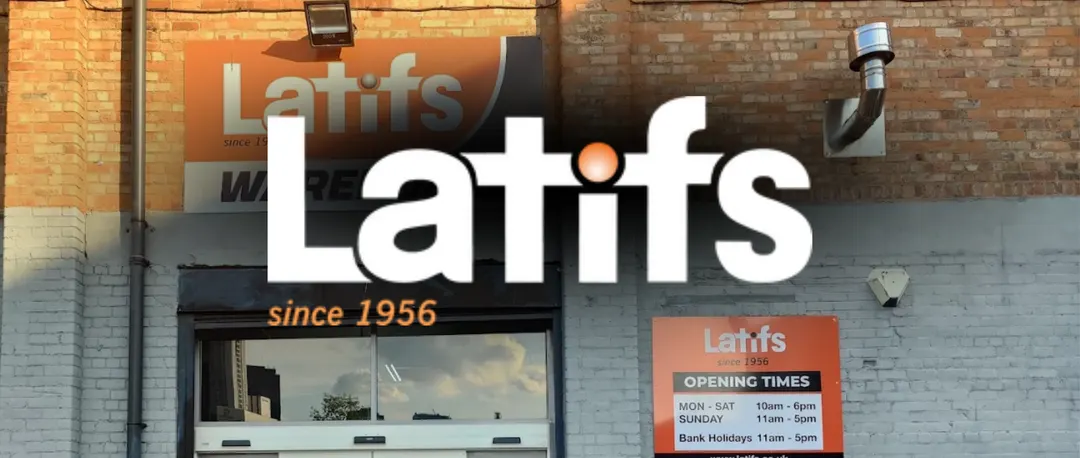
To see what this looks like in practice, consider the work Centauri did with a heritage food brand. The challenge was clear: an established reputation in local communities, but online visibility that didn't match the quality of the product. The goal wasn't just to rank for "authentic curry sauces"—it was to turn searchers into buyers who understood the brand's story and quality.
Centauri deployed a refined content strategy centred around content-led growth. That meant replacing dated visuals with a cleaner, more impactful style that focused on key food moments: golden-brown naan being pulled from a tandoor, slow-cooked stews bubbling in clay pots, fresh herbs scattered over finished dishes. Each image was optimised with descriptive alt text and structured data, making it indexable and relevant to search queries.
The results speak for themselves: the campaign drove over 500K views and 20K likes on core content assets. More importantly, those engaged with the content showed significantly higher conversion intent—proving that SEO that converts isn't about volume alone. It's about attracting the right audience and giving them a sensory reason to choose your brand over a competitor's. For the full breakdown of that project, you can read the case study. It's a clear example of how a focused content-first approach can modernise a heritage brand's digital presence while delivering measurable business outcomes.
How to Prepare for Retail SEO in 2026
If you want your retail brand to be competitive in 2026, here are three shifts to make now.
1. Move from keyword stuffing to intent clusters. Stop treating keywords as a checklist. Group your content around the intent behind the search. A user searching "how to season cast iron" is in the consideration phase—give them a guide, not a product page. Someone searching "buy cast iron skillet 12 inch" is ready to convert—make sure your product page loads fast, includes user reviews, and has clear CTAs.
2. Invest in visual SEO. That means more than just alt text. Use high-resolution images, short product videos, and 360-degree views. Implement structured data for images and video to qualify for rich results. Ensure every visual asset has a purpose—educating, inspiring, or reassuring.
3. Measure conversion, not just clicks. Set up conversion tracking in Search Console and Google Analytics. Track which queries lead to purchases, sign-ups, or other high-value actions. Use that data to double down on the content types and topics that actually drive results.
Centauri's marketing services (opens in a new tab) are built around this conversion-first philosophy. Whether you're a local retailer or a national brand, the principles are the same: create content that connects, optimise for the full user journey, and treat SEO as a growth driver—not a vanity metric.
The Bottom Line
Retail 2026 isn't a distant future—it's already arriving. The brands that will thrive are those that stop chasing rankings and start understanding what makes a shopper click, stay, and buy. SEO that converts is a blend of smart strategy, compelling content, and measurable execution. When you get that mix right, you don't just earn traffic. You earn customers for life.
Want the full story? Read our case study with Latifs.