Marketing
Content Marketing for Food & Beverage 2026: Why Visual Storytelling Is Now Non-Negotiable
In a digital ecosystem where attention spans are shrinking, food and beverage brands that rely on generic photography and stock imagery are being left behind—cinematic content marketing has become the differentiator for 2026.
The Shift from "Food Porn" to Narrative-Driven Content
The food and beverage industry has long understood the power of visual appeal. A beautifully plated dish, a perfectly poured latte, a golden-crusted pizza fresh from the oven—these images have driven social media engagement for years. But as we move through 2026, something fundamental has changed. The market is saturated, consumers are savvier, and the bar for what constitutes compelling content has risen dramatically.
Today's diners aren't just looking for something that looks good to eat; they're looking for an experience they can feel. They want to know not just what they'll taste, but how the space will make them feel, how the staff will treat them, and what story the brand tells about itself. This is where Content Marketing for Food & Beverage has evolved from a nice-to-have into a strategic imperative.
The numbers tell the story clearly. Research consistently shows that branded video content generates significantly higher engagement rates than static imagery, and restaurants that invest in narrative-driven content campaigns see measurable increases in foot traffic and repeat visits. But here's the catch: it's not enough to simply produce more content. The content must be intentional, authentic, and strategically aligned with how the brand wants to be perceived.
Why Local Perception Is the Hidden Battleground
One of the most overlooked factors in food and beverage marketing is the role of local geography in shaping consumer perception. A restaurant might have world-class cuisine, impeccable service, and stunning decor—but if it's located in an area with a negative reputation, those qualities can be overshadowed by bias. This is a challenge that many independent restaurateurs face, and solving it requires a content strategy that actively reshapes how people see the space.
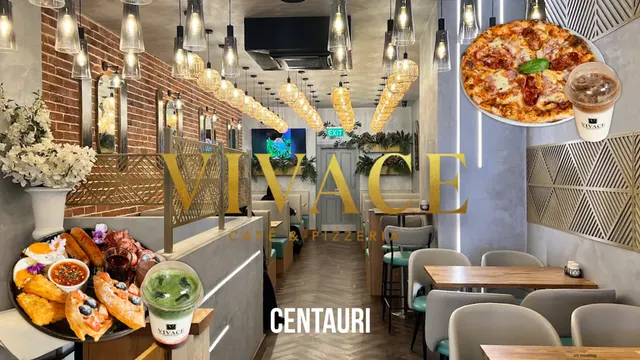
Consider the case of Vivace Cafe & Pizzeria, a Birmingham-based restaurant that found itself grappling with exactly this issue. Despite offering a high-end dining environment with professional-grade interiors, the business was fighting against the local stigma associated with the Alum Rock area. Potential customers were staying away not because of the food, but because they had preconceived notions about the neighborhood. The challenge wasn't quality—it was perception.
This is a scenario that plays out across the UK and beyond, and it's precisely why Content Marketing for Food & Beverage in 2026 must go beyond simple promotion. When location works against you, your content must work twice as hard to redefine the narrative. The solution lies in creating a visual identity so compelling that it overrides geographic bias entirely.
Cinematic Content as a Geographic Disrupter
The most effective food and beverage campaigns today borrow techniques from filmmaking. They use lighting, composition, music, and pacing to create an emotional response that transcends the simple documentation of food. This approach—often called cinematic content marketing—allows brands to control the viewer's entire experience of the space, regardless of where it's located.
For Vivace, this meant adopting a visual contrast branding strategy. Instead of trying to fight perceptions about Alum Rock head-on, Centauri shifted the focus entirely inward. The content campaign highlighted the restaurant's stunning interior as a hidden sanctuary—a place that defied expectations and offered an escape from the everyday. High-production-value video and photography showcased the decor, the ambiance, and the care that went into every detail of the dining experience.
The results speak to the power of this approach. The campaign generated over 1.1 million impressions, 32,000 likes, 11,000 shares, and 858 comments. These aren't vanity metrics—they represent real engagement from people who were moved enough by the content to interact with it, share it, and ultimately, change their perception of what the restaurant represented.
This is the new standard for the industry. When your content is strong enough to overcome location bias, you know you've built something that resonates. And for any food and beverage brand operating in a challenging market, this kind of strategic content marketing isn't optional—it's survival.
The Anatomy of High-Performance F&B Content in 2026
So what does a winning content strategy actually look like for food and beverage brands this year? Based on what's driving results in the current landscape, several elements consistently appear in the most successful campaigns.
First, authenticity is paramount. Consumers have developed an almost sixth sense for content that feels staged or inauthentic. The most effective brand content feels like a window into a real experience, not a commercial. This means shooting in natural light when possible, featuring real customers (with permission), and avoiding the over-filtered, hyper-saturated look that dominated food photography five years ago.
Second, platform-specific optimization is critical. A piece of content that performs well on Instagram might fall flat on TikTok, and what works for a LinkedIn audience might not resonate on YouTube Shorts. Tailoring format, length, and tone to each platform isn't just best practice—it's essential for maximizing reach.
Third, user-generated content is increasingly becoming the most trusted form of brand content. Encouraging diners to share their own experiences (and then repurposing that content with permission) creates a feedback loop of authenticity that no amount of professionally produced content can replicate. However, this works best when the brand has already established a strong visual identity through professional content first.
Finally, every piece of content should serve a strategic purpose beyond simply looking good. Whether it's driving reservations, building brand awareness, or countering a negative local perception, there needs to be a measurable goal attached to every post, video, or campaign. Without this clarity, content marketing becomes noise.
Why 2026 Is the Year to Invest in Strategy, Not Just Volume
There's a temptation among food and beverage operators to chase volume—to post more frequently, to jump on every trend, to produce as much content as possible in the hope that something sticks. But the data from successful campaigns tells a different story. In 2026, the brands winning are those that invest in fewer pieces of higher-quality content, each carefully crafted to serve a specific purpose.
This is where working with a strategic partner becomes invaluable. At Centauri, we've seen time and again that the brands willing to step back from the content treadmill and invest in a thoughtful, research-backed approach see dramatically better returns. That doesn't mean spending more money—it means spending smarter.
For food and beverage brands looking to strengthen their content marketing, the path forward involves several key steps: auditing existing content to identify what's working and what isn't, researching audience perceptions (both positive and negative), developing a visual narrative that addresses those perceptions directly, and then producing content that executes that narrative with cinematic quality.
If you're interested in seeing how this approach transforms a local restaurant's visibility, you can read the full story of how Vivace Cafe & Pizzeria redefined its brand perception through strategic content marketing.
The Long Game of Content Marketing for Food & Beverage
The brands that will dominate the food and beverage landscape in the coming years won't necessarily be the ones with the biggest budgets or the most famous chefs. They'll be the ones that understand the power of story—that a restaurant isn't just a place to eat, but a place to feel something.
Content marketing, when done right, bridges the gap between what a brand offers and what its audience perceives. It takes the tangible—the food, the decor, the service—and wraps it in an emotional context that makes people want to be part of it. In an industry where competition is fierce and margins are thin, this connection is everything.
For restaurant owners, cafe operators, and food entrepreneurs, the message from 2026 is clear: your content is your reputation. Invest in it strategically, tell your story with cinematic care, and never underestimate the power of a visual narrative to change minds—and bring customers through your door.
Want the full story? Read our case study with Vivace Cafe & Pizzeria.