Marketing
Content Marketing for Food & Beverage 2026: Why Sensory Storytelling Beats the Scroll
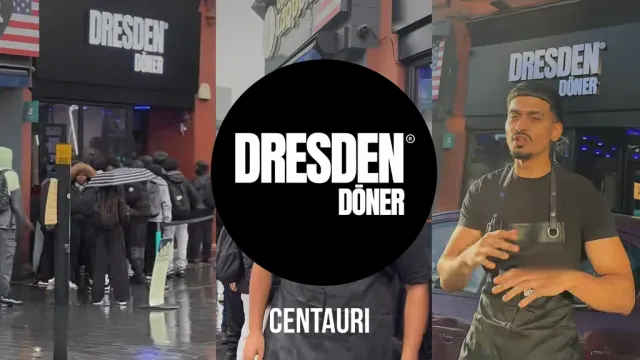
The fast-scroll era is ending — and the brands winning in 2026 are the ones that make audiences stop, feel, and head to the door.
The New Stakes in a Saturated Market
Food and beverage brands have never had more competition for attention. By 2026, the average consumer is exposed to thousands of pieces of digital content every day, and the “scroll-by” instinct is sharper than ever. Generic shots of a burger or a latte no longer cut it. The brands that thrive are the ones that treat content as more than a posting schedule — they treat it as a sensory experience.
Content marketing for food and beverage in 2026 isn’t about recipes alone or behind-the-scenes clips. It’s about creating a visceral, location-aware pull that makes the audience feel like they can taste, smell, and reach for the product. And for independent restaurants and local chains, this shift is a massive opportunity to compete with bigger spenders by using creativity and community proximity as fuel.
At Centauri, we’ve seen this trend accelerate across our Marketing (opens in a new tab) practice. The brands that invest in high-touch, hyper-local content strategies are seeing conversion rates that outpace generic advertising, especially in competitive city-centre environments.
Why Sensory Content Is the New Standard
One of the most powerful developments in content strategy is the rise of “sensory videography.” This goes beyond food porn — it’s about macro shots that capture the sizzle, the steam, the glide of a knife through a crust. Combined with sound design that cues anticipation, this approach rewires how hungry viewers respond.
Consider the psychology: when a viewer sees a close-up of golden fries being sprinkled with sea salt, their brain’s reward centres activate almost as though they’re tasting it. That feeling — called embodied cognition — shortens the gap between seeing and buying.
In 2026, the most effective campaigns don’t just show — they evoke. The difference is measurable in engagement rates that go far beyond the industry average. The evidence is clear in a recent campaign for a Birmingham-based quick-service brand, Dresden Doner, where our team built a sensory-driven content strategy that yielded a 97% engagement rate.
That number isn’t a fluke. It came from a deliberate choice to film in macro, to capture the glisten of sauces and the fluff of bread, and to pair it with location-mapping videos that told commuters exactly how to walk from the nearest transport hub to the shop. The result: over 350,000 views and 15,000 new followers in a matter of weeks.
Sensory content is the engine. But it needs a local map to deliver the destination.
Local Community as a Competitive Advantage
Too many food and beverage brands treat digital content as a broadcast channel — shouting into the algorithm, hoping someone nearby hears. In 2026, the winning approach is the opposite: digital content should feel like a local conversation, not a billboard. That means showing not just what the food looks like, but how it fits into the daily rhythm of a neighbourhood.
Location-mapping videos, a tactic we deployed for the project mentioned above, are hitting a nerve because they reduce friction. They answer the implicit question every hungry potential customer asks: “Can I get there easily?” In the case of Dresden Doner, the brand sits just off a major station, Grand Central — but without clear visual cues, many potential customers walked past. The content fixed that by embedding the route into the storytelling.
But community content goes beyond logistics. It’s about showing the faces of local regulars, the stallholders nearby, the buzz of the street at lunchtime. People trust brands that feel like part of the fabric of their city. The algorithm rewards local mentions, geo-tags, and reviews. When content marketing aligns with real-world location data, the conversion loop closes faster than any generic campaign can.
This principle applies whether you’re a doner shop in Birmingham or a craft bakery in Brighton. The brands that treat their neighbourhood as a co-star in their content will win the footfall battle.
From Awareness to Conversion: The 2026 Playbook
Content marketing for food and beverage has traditionally been split into “brand awareness” (lifestyle imagery) and “direct response” (offers and coupons). The 2026 playbook merges these into one continuous funnel — because the best content does both at once.
A macro shot of a kebab dripping with chilli sauce is awareness. Add a five-second text overlay: “5 mins from Grand Central exit 3” – that’s conversion. Put them in the same reel, and you’ve got a sensory call to action.
The results stack up. In the campaign we built for Dresden Doner, the content didn’t just rack up views — it drove repeat mentions, growing the community from zero to 15,000 followers, with an engagement rate that industry benchmarks put in the top 1% of all food content on Instagram and TikTok.
You can see the full campaign breakdown in the Dresden Doner case study, which walks through the exact content pillars used: sensory food videography, location mapping, and real-time community spotlights现实.
The Numbers That Matter Now
When we talk about ROI in 2026, the metrics are shifting. Impressions are cheap. True engagement — comments, shares, saves — is the currency that algorithms reward and that converts to real-world footfall. The 97% engagement rate achieved for the Birmingham campaign is a signal: the audience isn’t just watching, they’re acting.
350,000+ views in a local market the size of Birmingham means that nearly one in ten households saw that content. 15,000 followers in that same period translates to a highly targeted local audience that now has a direct line to the brand’s next update. Those numbers aren’t vanity metrics — they’re the foundation of a repeat-customer ecosystem.
For any food and beverage brand planning its content strategy for the year ahead, the key takeaways are simple:
- Invest in sensory production. Macro lenses, good lighting, and sound design are not optional anymore.
- Make location explicit. Don’t just tag the city — show the exact walking route.
- Build community trust. Feature real people, real moments, real flavour reactions.
- Measure what matters. Engagement rate and local view-throughs are better predictors of footfall than reach.
The brands that embrace this approach will not only survive the 2026 content noise — they’ll become the ones everyone stops scrolling for.
Want the full story? Read our case study with Dresden Doner.