Marketing
Content Marketing for Food & Beverage 2026: The Track That Drives Real Results
As the food and beverage industry hits a digital saturation point in 2026, the brands winning are those that treat content not as a megaphone but as an invitation — and the numbers prove it.
The New Reality for F&B Content in 2026
Content marketing for food & beverage in 2026 has shifted from a "nice-to-have" to the central pillar of brand growth. With dining options more abundant than ever and consumer attention spans shrinking, the brands that break through are those who prioritise authenticity, sensory storytelling, and measurable outcomes over vanity metrics.
The landscape is crowded. Social feeds are flooded with perfectly plated dishes, influencer partnerships, and "viral" challenges. Yet, the data tells a clear story: generic content no longer converts. In 2026, the food and beverage brands seeing real return on investment are those who treat every piece of content as an asset with a specific job — drive awareness, build trust, or convert a customer.
Why Sensory-Led Content Outperforms Everything
One of the most significant shifts in content marketing for food & beverage this year is the emphasis on sensory-led storytelling. Consumers don't want to be told a burger is "delicious" — they want to hear the sizzle, see the melt, and almost taste the crunch. This isn't just creative preference; it's neuroscience. Content that triggers multiple senses activates memory and emotion more effectively than text or static images alone.
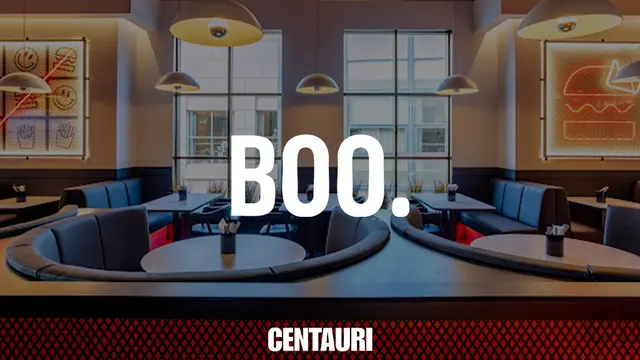
Take, for instance, the case of BOO Star City, a modern smashburger concept that needed to break into a market already saturated by established names. The challenge was not product quality — Boo Burger's bold flavour and clean execution were undeniable — but signal. In a sea of fast-food noise, how do you make a new voice heard?
The Proof Point: 286,000 Views and Counting
The answer was a refined content marketing strategy that put sensory-first execution at its heart. Centauri worked alongside Boo Burger to strip back their visual identity to a cleaner, more distinctive aesthetic — one optimised for digital performance. The old approach was good; the new one was precise.
The results speak volumes. The campaign generated 286,000 views — not impressions, not reach, but actual views. That number is not just a vanity metric. In the context of content marketing for food & beverage in 2026, it represents a deep, engaged audience. These are potential customers who chose to stop scrolling and watch. More importantly, they watched content that was designed to convert: close-ups of smash patties crisping on the griddle, slow-motion pulls of melted cheese, the audible crunch of a fresh bun.
Quality Over Quantity: The 2026 Content Ethos
There is a temptation in food and beverage marketing to post constantly — three times a day, seven days a week. The belief is that volume equals visibility. But 2026's most successful content marketing strategies challenge this assumption. Brands that are winning are those that post less but produce higher-quality, more intentional content.
The Boo Burger campaign demonstrates this perfectly. Rather than flooding channels with dozens of posts, the strategy focused on fewer, higher-impact assets — each one designed to serve a specific purpose in the customer journey. This approach not only protects brand equity but ensures that every piece of content has room to breathe and be seen.
How to Build a Content Marketing Strategy That Works in 2026
For food and beverage brands looking to replicate this success, the roadmap is clear. First, invest in your visual identity. Content marketing for food & beverage in 2026 demands a look that is instantly recognisable even in a tiny thumbnail. That means clean lines, consistent colour palettes, and a focus on food as the hero.
Second, prioritise sound and motion. The difference between a still photo of a burger and a 15-second video of that same burger being assembled is the difference between a view and a purchase intent. Sensory triggers matter.
Third, measure what matters. The 286,000 views in the Boo Burger case are not just a number — they are a benchmark. Centauri's approach to marketing (opens in a new tab) is rooted in data that tells a story, not just data that fills a report.
The Future of F&B Content Is Intentional
As we move deeper into 2026, the brands that thrive will be those that treat content marketing as a strategic investment, not a box to tick. The days of "post and pray" are over. Every piece of content must earn its place in the customer's feed.
Boo Burger's 286,000 views are proof that when you combine a strong product with a focused, sensory-driven content strategy, the audience will follow. Content marketing for food & beverage in 2026 is not about shouting louder — it's about being worth watching.