Marketing
Content Marketing for Food & Beverage 2026: Beyond the Menu Page
The era of passive menu listings is over — here’s how sensory-driven content rewrites the rules for food brands ready to capture attention in 2026.
The food and beverage industry has always been a visual marketplace. But in 2026, the difference between a brand that gets scrolled past and one that gets devoured isn’t the recipe — it’s the storytelling. As competition for screen time intensifies, content marketing for food & beverage 2026 demands a radical shift from static product shots to orchestrated, multi-sensory content journeys that trigger hunger, emotion, and action simultaneously.
This isn’t about posting a better photo of a burger. It’s about engineering a content ecosystem where every asset — from a 15-second clip of caramel dripping to a long-form recipe narrative — works together to build craveability. The brands that win are the ones who understand that food content is no longer just about showcasing ingredients. It’s about manufacturing moments so vivid they almost taste real.
The Problem with the Plated Shot
For years, the food and beverage default was clean, well-lit, and uniform. White plates, neutral backgrounds, consistent angles. It worked for a catalogue. But it rarely worked for a scroll. In 2026, food content competes not just against other restaurants, but against everything — travel reels, fashion drops, user-generated reviews, and algorithmic snippets designed to keep thumbs still.
The challenge is that viewers have become connoisseurs of authenticity. They can spot a staged, overcooked hero shot from the first frame. They crave messiness that feels intentional — sauce on the edge of the bun, steam that moves, a knife cutting through something that cracks. Content marketing for food & beverage 2026 requires embracing imperfection as a trust signal.
Centauri’s approach to this problem is rooted in understanding the core psychographic triggers that drive food purchasing decisions: anticipation, reward, and shared experience. When you strip away the branding, what remains is a primal response to visual cues of ripeness, heat, and texture. By engineering content that amplifies these triggers, food brands can bypass rational evaluation and speak directly to appetite.
Building a Content Engine That Feels Real
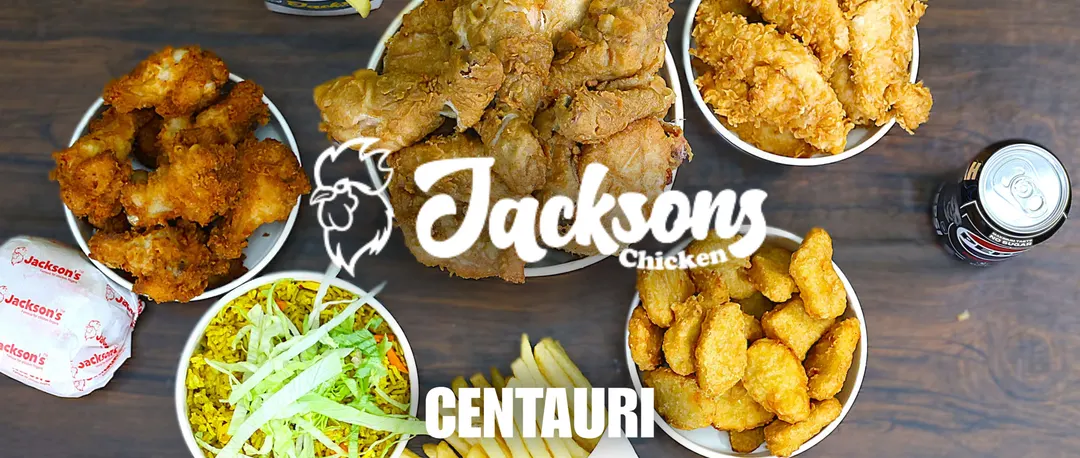
The execution of a modern food content strategy cannot be a one-off photoshoot. It must be a living engine of production, iteration, and distribution. For a brand like Jacksons Chicken, a fast-paced fried chicken concept built around bold flavours and crispy textures, the challenge was clear: how do you communicate indulgent comfort in a saturated market without blending into the noise?
The solution was a refined content strategy centred around high-quality, sensory-led visuals designed to maximise product appeal and capture attention instantly. By focusing on key food moments — crispy textures, sauce glazes, the glisten of hot oil — Centauri created a visual language that didn’t just look good, it felt urgent. This is content marketing for food & beverage 2026 in practice: not explaining why something tastes good, but showing the texture, the colour, the movement that makes you want to eat it immediately.
The results speak directly to the power of this approach. Through a combination of shot design, platform optimisation, and timing that aligned with peak craving windows, the campaign generated over 1.2 million views. That’s not a vanity metric. Views in food content are a proxy for desire — a confirmation that the visual stimulus successfully triggered a physiological response. For a fast-casual brand, that’s the difference between a menu glance and a craving.
Why Sensory Verisimilitude Outperforms Polished Perfection
One of the most common misconceptions in food content is that more expensive equipment equals better results. But in 2026, the most effective food content often comes from officers who understand lighting and composition over raw resolution. Macro close-ups of batter crunching, slow-motion pours of sauce pooling, and audio that captures the crackle of a fry — these elements build a sensory experience that a pristine plated shot cannot.
This principle is what separates good content marketing from great. When Centauri works with food and beverage clients, the focus is always on what we call "the edible moment" — that micro-second where the food looks as alive as it will ever be. It’s the gleam on a glaze before it sets, the steam rolling off a just-sliced piece of meat, the slight wobble of a perfectly set pudding. Capture that, and you don’t just show food — you sell hunger.
For content marketing for food & beverage 2026, this means rethinking the creative brief. Instead of "show the menu item in its best light," the brief becomes "show the menu item at the exact peak of its appeal." This requires collaboration with chefs, timing of service, and an editorial eye that understands the fleeting nature of peak freshness. It also requires trust between the brand and the content partner — trust that messy is sometimes more appetising than tidy.
Distributing for Craving Windows
Great food content is useless if it reaches people when they’re full. Timing matters tremendously in this vertical. The brands that thrive in 2026 are the ones who map their distribution calendars to known craving curves — late morning for lunch decisions, mid-afternoon for snack impulses, and late evening for indulgent recommendations.
Centauri’s marketing (opens in a new tab) framework accounts for this by building platform-specific distribution playbooks. A video that works at 11 AM on a weekday might flop on Sunday evening. The same asset, optimised for audio-off first impressions, can perform radically differently depending on whether it’s embedded in a short-form feed or a longer-form recipe showcase. The granularity of this approach separates noise from signal in a crowded content environment.
And the data is clear: brands that pair high sensory quality with time-aligned distribution see outsized returns. The 1.2 million views generated for Jacksons Chicken didn’t happen by accident. It happened because every piece of content was designed to intercept a specific craving moment, then distributed when those cravings were statistically most intense. This is the new mathematics of content marketing for food & beverage 2026 — not just creating great food video, but knowing when to serve it.
The New Competitive Advantage
The brands that will own the food narrative in 2026 are the ones who stop treating content marketing as a separate department and start treating it as the core product experience. A menu is no longer just a list of items with prices — it’s a content portfolio. Every dish represents an opportunity to create a miniature film, a tutorial, a review magnet, or a social challenge.
This requires a shift in how restaurant groups and packaged food brands allocate resources. Instead of a single annual photoshoot with a stylist, forward-thinking brands are investing in in-house content studios, rapid prototyping of visual assets, and continuous A/B testing of angles and lighting. The goal is no longer to have a "good" menu page — it’s to have an irresistible one.
Centauri’s work with Jacksons Chicken is a case study in how this principle scales. By embedding content thinking into the very fabric of how the brand presents itself, from its social feeds to its website, the result is a cohesive appetite-driving machine. For a deeper look at the full strategy and the specific creative decisions that powered those results, you can explore the detailed case study that breaks down the execution behind the numbers.
What Comes Next
Content marketing for food & beverage 2026 isn’t about chasing trends. It’s about returning to the fundamental truth that food is one of the most emotional, sensory, and shared experiences we have. The brands that succeed will be the ones that treat every piece of content as an invitation — not just to view, but to feel an urge so strong it demands satisfaction.
The bar has risen. Menu pages are no longer enough. If your brand’s content strategy still relies on static photography and generic descriptions, it’s already behind. The next wave belongs to those who understand that the most powerful food marketing doesn’t tell you what to eat — it makes you need it.
Want the full story? Read our case study with Jacksons Chicken.